In my last post, I shared that the first step in my fabulously festive "Laurie Boettcher Speaks Social Media Process" is to Listen and provided a link to a worksheet that can help tally those results.
The next step in my process is to Plan. That sounds simple enough, but what is it that we plan? Let's stop and ask ourselves, our group, our committee, our organization, or whoever is involved:
- Why do we want to get involved in social media?
- What do we hope to achieve?
- What platforms are the best fit for me/us?
- Who is going to be involved in our social media efforts?
- Who will be responsible for posting / commenting / maintaining / archiving/ etc.?
- What training do those individuals need and who will provide it?
- What is our schedule of consistency?
- How much time will be allotted?
- How will we promote our social media presence(s)?
- How will we define success in 30, 60, 90, and 180 days?
- Do we have a social media policy?
Know that these questions don't need elaborate answers, but they do need to be addressed. The more we open the dialogue about our wants, needs, and expectations, the better we are able to evaluate our efforts and make adjustments where necessary.
It is important to be realistic with each question. Maybe our definition of success in 30 days is that we have made a decision about what social media platforms we will use, who will be responsible, and training is in progress. Unless we have unlimited time, resources, and budget, social media will become a chore if we aren't realistic in our planning and approach. It shouldn't be that. It should be a tool(s) we use to interact and engage with our followers on their terms.
The worksheet and tools that accompany this step are currently only available to my clients. In the new year, I will be making it available for download.
What is the most challenging part of the social media planning process for you and/or your organization?
Connect with me at http://www.lbspeaksonline.com/ or at www.facebook.com/lbspeaksonline.
The idea of jumping into the game of social media, much less 'embracing' it, can be overwhelming to many. If we have thought this through, we realize it is going to/does take time, effort, and resources to participate in whatever platform(s) we decide to participate.
Each social media professional/enthusiast/guru/ninja (whatever we are calling ourself), has his or her own approach to social media. Over the next couple of weeks, I am going to walk you through my process. It is a five-step process which is cyclical in that, in order to be successful, we must contstantly continue and evolve it.
The first step in the fabulously festive "Laurie Boettcher Speaks Social Media Process" (isn't that a mouthful?) is Listen. To make the best use of our resources (time, energy, budget, and staff), we need to know where our audience is - patrons, clients, members, stakeholders, whoever they are. Where are they? What social media platforms are they using? We want to be where they are. We can't say, "we want to be on Twitter" only to find out that there are only five of our patrons that use Twitter. Social media interaction and engagement is not about us. It's about them - our people.
I have uploaded an updated version of the 'Where Are You in Social Media' worksheet to Slideshare at www.slideshare.net/laurieboettcher under the Documents section. Print a couple out for your audience to complete. This allows us to make an educated and informed Decision.
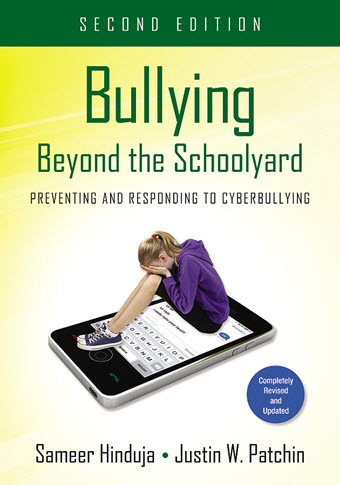
Cyberbullying and irresponsible use of social networking platforms have infiltrated our news for some time now. As I mentioned in the closing of Tuesday's post, we need to open the dialogue about social media.
 Just as tweens/teens do, we as parents make choices every day. We can make the choice to 'friend' our child on Facebook and then scold/shame them for the things they and their friends post or we can take a different approach. We can refrain from commenting online and use it as a listening tool. Not only does it allow us to see the character of children, but gives us insight in how to protect them by arming them with knowledge and decision-making skills.
When I was in high school, we had typing and computer classes because these were seen as essential skills needed in the work world. As technology continues to evolve, we need to turn our efforts to educating our tweens, teens, and college students on using social media effectively and what it means to 'be social.'
For our Millennials, it is their reality that social media knowledge will be a highly sought after skill in any career they may pursue. It is also their reality that some of the highest paying and most desirable jobs have to do with social media including programmers, developers, project managers, bloggers, new media specialists, web engineers, content coordinators, digital marketing directors, community managers, and more.
These jobs were unheard of when I was in high school. The truth is that we are preparing our youth for these jobs and jobs that don't even exist yet. To give them an edge in a competitive workforce, it is our responsibility to educate ourselves in social media, so we can, in turn, educate our youth and open the dialogue to this new world.
Connect with me on my web site at www.lbspeaksonline.com, on Facebook, or on Twitter.
Remember when e-mail first debuted? We made up our own rules as we went, used it how we chose, and tended to be a bit careless. Then, we learned e-mail etiquette and we were taught how to use e-mail appropriately - both for business and personal.
Social media is no different. It has its own language, its own culture, and its own etiquette. As Eric Qualman so eloquently reminds us, social media is a fundamental shift in the way we communicate. Although the platforms (Facebook, MySpace, Twitter, etc.) may evolve or change, the fact that our way of communicating in this engaged manner has not and will not.
To participate in social media, we need to learn how to 'be social.' Being social means knowing our purposes, what is appropriate to post and what is not, how to interact, handling conflict, using correct terminology, but most of all, knowing what we are sharing and with whom by protecting our privacy on our social media accounts.
Being social not only provides us with invaluable knowledge, but it helps us teach the next generation to use this mode of communication that will shape their workforce and skill sets. I'll talk about that more in Tuesday's blog.
Connect with me on my web site at www.lbspeaksonline.com, on Facebook, or on Twitter.